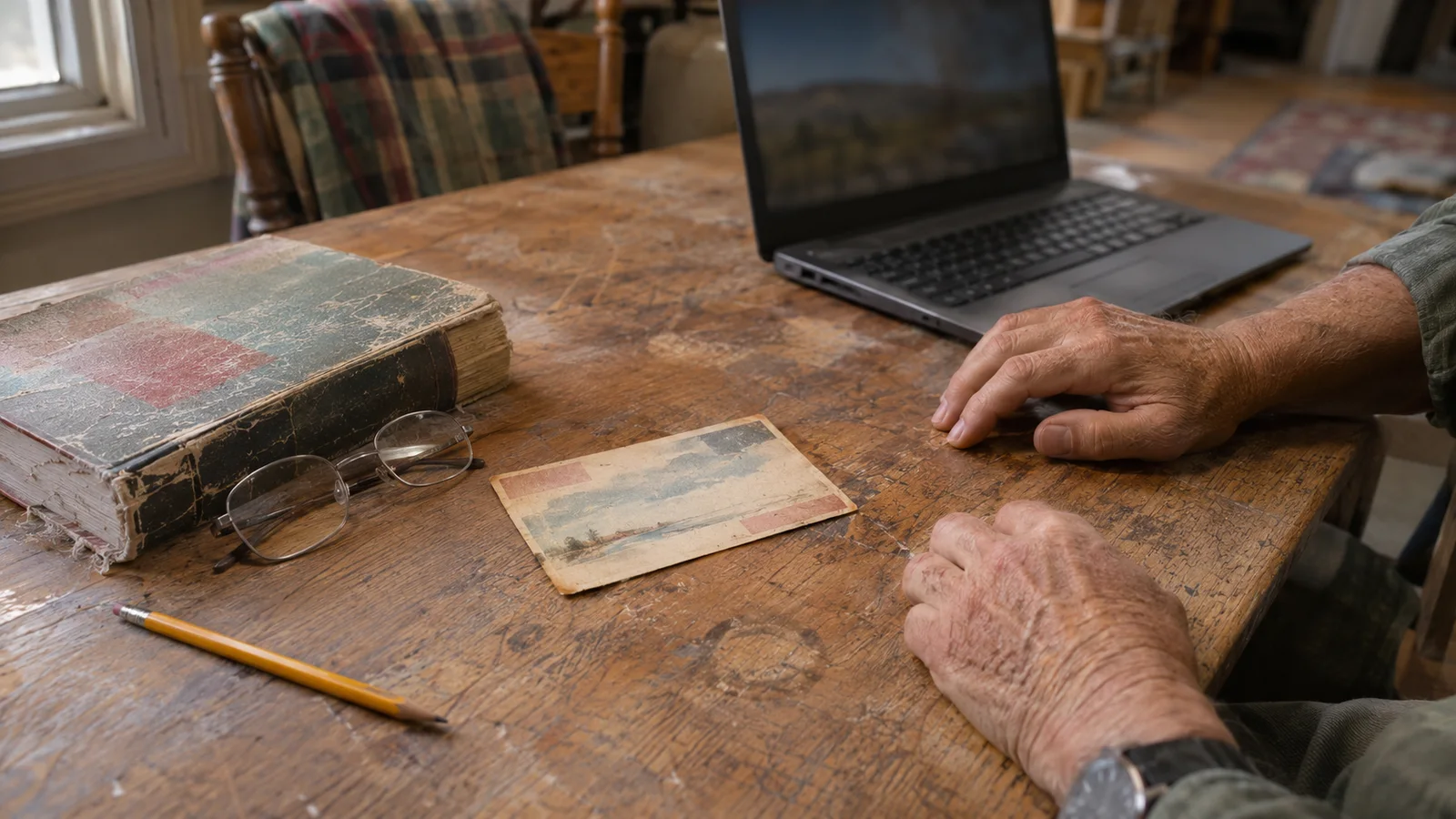
My great-grandfather, Theron Zane, was licensed as K6SBR in 1959. He died in 1990, five years before I was born. His license expired in December 1999, when I was four, and the FCC cancelled the call in March 2002, when I was six. In 2023, a year after I earned my General Class license, the FCC granted me K6SBR. I had never met the man, but I now sign the same five characters he signed from La Crescenta, California, sixty-plus years ago.
Since then I have had several hams ask how it works. Most of them have a parent, grandparent or uncle whose call they would like to carry on, and most of them have heard three different versions of the rules. This is the version I can stand behind, with the regulation cited so you can check it yourself, followed by what the process was like in practice.
First, the one rule that decides everything: the two-year wait
A U.S. amateur license runs ten years. When it expires, the holder gets a two-year grace period in which only they can renew it. If nobody renews, the license is cancelled and the call sign goes back into the pool. Under the FCC vanity call sign system, a call sign that was held by someone else is not available to a new applicant until two years after the license that held it expired, or was cancelled, whichever applies. The authority is 47 CFR 97.19.
That two-year clock is the thing to work out first. In my case it had run out two decades earlier. Theron's license expired December 26, 1999, the FCC cancelled it March 7, 2002, and by 2023 K6SBR was simply an unassigned call that happened to mean something to my family. There was no waiver to invoke and no one to compete with.
The close-relative exception
If your relative died recently and the two years have not passed, the rules give you a way around the wait. Section 97.19 lets a close relative of a deceased former holder apply for the call sign without waiting the two years. The FCC's list of who counts is specific: spouse, child, grandchild, stepchild, parent, grandparent, stepparent, brother, sister, stepbrother, stepsister, aunt, uncle, niece, nephew, or in-law.
Read that list carefully, because it stops at grandchild. A great-grandchild is not on it. Had Theron died in 2022 instead of 1990, I would have had no special claim on K6SBR and would have been waiting out the two years with everyone else. That surprises people. The waiver was written for the common case, a son or daughter picking up a parent's call, and it does not stretch to cover every descendant.
Two practical notes on the waiver. The former holder must be deceased; a living relative who has let a license lapse cannot hand you the call through this route, though they can change to a new call themselves and you can then apply for the old one. And you will need to be able to show the relationship if the FCC asks, so have the death certificate and anything that documents the family tie before you file.
Your license class has to match the call sign format
Call signs are grouped by format, and each group is open to certain license classes. The short calls, one letter, a digit and two letters, or two letters, a digit and one letter, are Group A and need an Amateur Extra. Two-letter prefix, digit, two-letter suffix with a K, N or W prefix is Group B, for Advanced and above. A one-letter prefix with a three-letter suffix, like K6SBR, is Group C and is open to Technician Class and above. Group D is the two-by-three format everyone gets issued at first.
So if your grandfather held W6AB, you need an Amateur Extra Class license before you can ask for it. If he held K6SBR, a General Class license will do. The format rules are on the FCC's amateur call sign page. Check this before anything else, because an application for a call your class does not qualify for is dismissed and the fee is not refunded.
Finding the record
Everything above depends on knowing the exact call sign and its history. The FCC Universal Licensing System is the place to start. You can search by call sign or by name. For a license that lapsed after the mid-1990s, ULS will show the grant date, the expiration date and the cancellation date, which are the three dates you need. K6SBR's record showed a grant on December 26, 1989 at my great-grandfather's San Bernardino address, expiration December 26, 1999, and cancellation March 7, 2002. That one search told me the two-year rule was satisfied and that nobody had picked the call up since.
For older history, ULS runs out. Theron's original 1959 grant is not in it. The scanned Radio Amateur Callbooks on the Internet Archive filled that gap for me; the 1960s editions list K6SBR at La Crescenta. HamCall and similar databases sometimes carry older data too. None of that is required for the application, but it is how you confirm the call was really your relative's and not a different operator with the same name.
Filing the application
You need an FCC Registration Number and a CORES login, which you already have if you hold a license. Sign in to ULS License Manager, open your license, and choose the option to request a vanity call sign. The form takes up to 25 call signs in order of preference and grants the first one on your list that is available. Put the family call first and, if you have no second choice, leave the rest blank. You can also file through the ARRL VEC vanity service, which is the same application with someone checking it before it goes in.
There is an application fee, $35 as of this writing, payable within ten days of filing through the FCC's payment system. Miss the ten days and the application is dismissed. Check the current amount on the FCC fee schedule before you file, because it changes.
The FCC does not grant vanity applications the moment they arrive. Applications are held about 18 days so that any competing requests for the same call filed on the same day can be sorted out, then processed in order. I filed in late March 2023 and the grant came through on April 14, 2023. When it did, my old sequential call was released and K6SBR appeared on my license in ULS.
What to do once the call is yours
A new call sign touches more accounts than you expect. Logbook of The World needs a new certificate for the new call; your old call's log stays under the old certificate, so nothing is lost. Update QRZ, eQSL, your club roster, any repeater or net databases you are listed in, your QSL cards, and anywhere else the old call appears. If you keep a website, update that too. I built this one partly so there would be a record of where K6SBR has been.
Things that go wrong
- Counting the two years from the cancellation date instead of the expiration date. The clock runs from expiration; cancellation can be years later and does not restart anything.
- Assuming the close-relative waiver covers you. Check the list. Great-grandchildren, cousins and friends are not on it.
- Applying for a call your license class cannot hold. Dismissed, fee gone.
- Not checking whether someone else already has the call. If ULS shows an active license on it, it is theirs, and the only option is to wait and watch for it to lapse.
- Filing and forgetting the fee. Ten days.
Why bother
A call sign is just an identifier. The FCC does not care who held it before, and the station on the other end of a QSO usually does not either. But it mattered to my family that Theron's call came back on the air, and it matters to me every time I key it. If there is an old call sign in your family, the rules are not hard. The short version is on my step-by-step reclaim guide, and the long version, the one about who Theron was, is on the history page.