Theron Zane, 1916 to 1990
Loman Theron Zane, who went by Theron all his life, was born October 11, 1916 in Broadlands, a small farm town in Champaign County, Illinois. He married Ernestine Maryann Jackson on February 18, 1939, and they raised two daughters, Sharon and Karon. The family settled in Southern California, first in Eagle Rock, the Los Angeles neighborhood next to Glendale where Sharon and Karon were born, and later a few miles up the hill in La Crescenta. It was from La Crescenta, in 1959 at age 42, that Theron was first licensed as K6SBR. The 6 in the call marks the California call district where it was issued, and in those days a K6 two-by-three call like this one was issued in sequence to a newly licensed General class operator.
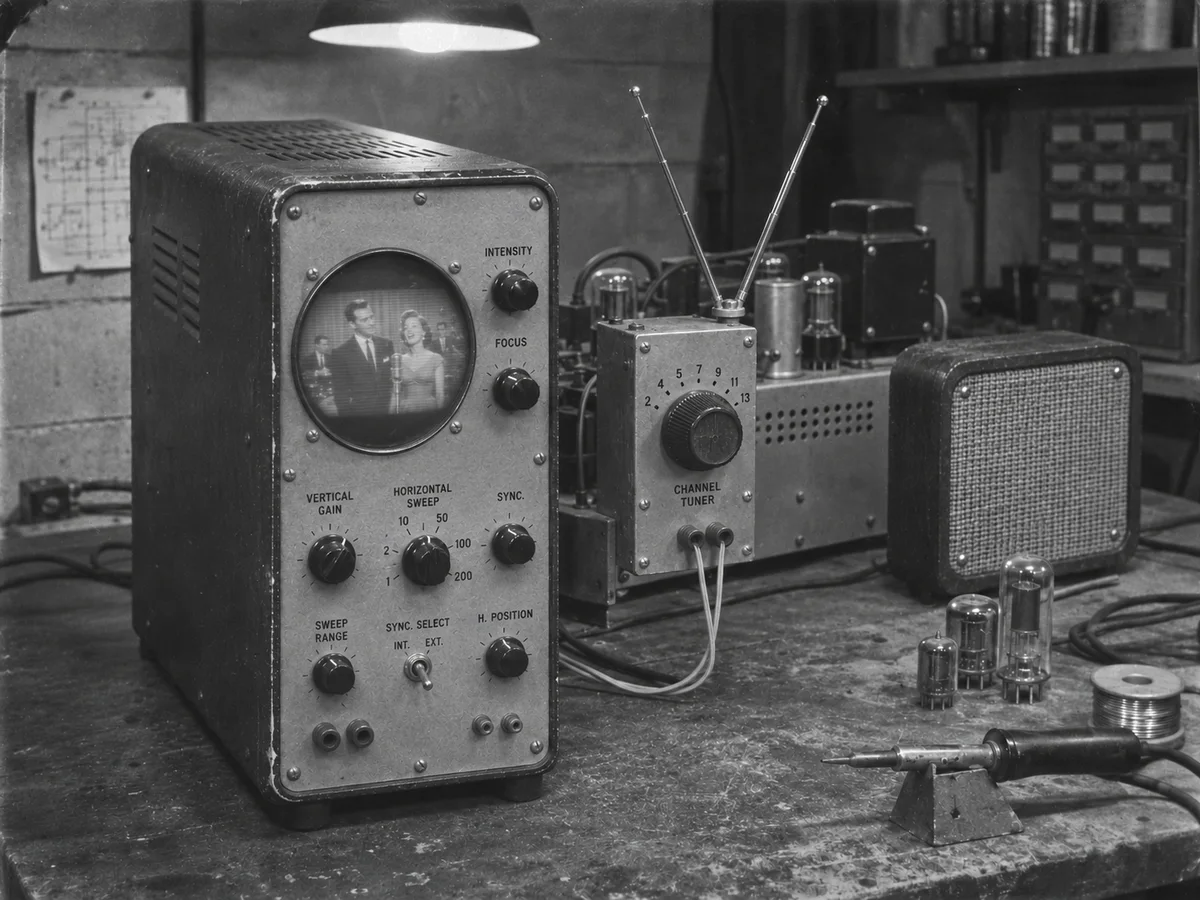
Radio was one piece of a lifelong interest in anything with a circuit in it. Theron was drawn to electronics, cameras, and, when it arrived in the early 1980s, home video. The family story that gets told most is the television: he built the first TV set on their block himself, starting from an oscilloscope, and the neighborhood kids would come over to watch it with Sharon and Karon.
He kept the call for the rest of his life. The family later moved east along the San Bernardino Valley, to Rialto and then San Bernardino, and FCC records show K6SBR renewed on December 26, 1989 at the San Bernardino address for a ten-year term running to December 26, 1999. Six months later, on June 28, 1990, Theron died in San Bernardino at 73. The license outlived him: it stayed on the books until the 1999 expiration and the FCC formally cancelled K6SBR on March 7, 2002.
TO FILL IN if known: the rig Theron ran, bands and modes he favored, any QSL cards or logbook pages that survived.
The call comes back, 2023
A cancelled call sign returns to the FCC pool after a waiting period and can be requested by any eligible operator under the FCC vanity call sign system. Theron's great-grandson Cody earned his own license in 2022, then applied for K6SBR. The FCC granted it on April 14, 2023, and the current license runs to April 14, 2033.
The full route from Eagle Rock to Grand Junction is drawn out on Where K6SBR has lived, and the process Cody followed is written up in How to reclaim a family member's call sign.
Cody never met Theron, who died before Cody was born. But the line runs straight: the man who built a television from an oscilloscope has a great-grandson who keeps a television station on the air for a living and keys the same five characters from a station in Grand Junction, Colorado.
Timeline
- 1916 Loman Theron Zane born October 11, Broadlands, Illinois.
- 1939 Theron marries Ernestine Maryann Jackson, February 18.
- 1959 Licensed as K6SBR, La Crescenta, California.
- 1989 License renewed December 26, San Bernardino, California.
- 1990 Theron dies June 28 in San Bernardino, age 73.
- 1999 License term ends December 26.
- 2002 FCC cancels K6SBR on March 7.
- 2022 Cody Kennerknecht licensed, joins the Western Colorado Amateur Radio Club.
- 2023 FCC grants K6SBR to Cody as a vanity call on April 14. Back on the air from Grand Junction.
- 2033 Current license expires April 14.
Gallery
Theron's QSL card, license, or logbook page
Photo of Theron Zane